

Remote work gives companies access to talented people wherever they live, but distance can make great work easier to miss. Employees may complete a difficult project, help a colleague, or solve a customer problem without ever sharing the same room as their manager.
That is why remote employee recognition needs to be intentional. Distributed teams feel valued when appreciation is timely, specific, inclusive, and visible in the places where work actually happens.
This guide explains how to recognize remote employees meaningfully, whether your company is fully remote, hybrid, or spread across several offices and time zones.
Why remote employees can feel overlooked
In an office, recognition often happens through small moments: a manager stops by a desk, a colleague notices someone helping, or a team celebrates immediately after a win. Distributed teams have fewer of these spontaneous signals.
Remote employees can also become less visible when they work different hours, communicate quietly, or contribute behind the scenes. If recognition depends only on live meetings or a manager’s memory, valuable work can go unnoticed.
A thoughtful system closes those gaps. It creates regular opportunities for managers and peers to notice contributions without forcing constant self-promotion.

12 remote employee recognition ideas that work
1. Make recognition specific and connected to impact
A generic “great job” can disappear in a busy chat channel. Strong remote employee recognition explains what happened, what the person did, and why it mattered. For example: “Your clear handoff notes helped the support team resolve the issue before the customer’s morning began.” That message shows the employee that their contribution was seen and understood.
2. Recognize people close to the moment
Remote work can make it tempting to collect praise for a future meeting or review. By then, the connection between the work and the recognition may be weaker. Send a short message when the contribution is still fresh, then mention it again during a team recap if broader visibility is appropriate.
3. Create space for peer-to-peer appreciation
Managers do not see every helpful action in a distributed workplace. Teammates often know who answered a difficult question, improved a document, or stepped in during a busy period. Give employees an easy way to thank one another, and make peer recognition a normal part of team culture rather than an occasional campaign.
4. Use both public and private recognition
Public praise can give an employee visibility, but not everyone enjoys being placed in the spotlight. Ask team members how they prefer to be recognized. Some may value a company-wide announcement, while others would rather receive a thoughtful private message or a quiet conversation with their manager.
5. Build recognition into existing routines
Recognition is more sustainable when it fits into work the team already does. Add a two-minute appreciation moment to a weekly meeting, include team wins in a Friday update, or create a recurring prompt in the company chat. A simple habit is usually more effective than an elaborate program that fades after launch.
6. Celebrate the work that remote teams often overlook
Distributed teams rely on valuable work that can be nearly invisible: documenting decisions, improving asynchronous communication, preparing clean handoffs, mentoring a new hire, or scheduling across time zones. Recognizing these contributions tells employees that collaboration and reliability matter as much as high-profile results.
7. Make milestones personal
Birthdays and work anniversaries are easy to automate, but an automated notification alone rarely feels meaningful. Add a personal note about the employee’s growth, a memorable contribution, or the way they support colleagues. Invite teammates to contribute messages, while respecting employees who prefer not to make personal milestones public.
8. Rotate meeting times and recognition opportunities
If every team meeting favors one time zone, the same employees may repeatedly miss live celebrations and leadership visibility. Rotate meeting times where practical, record important announcements, and repeat recognition in an asynchronous channel so employees are not disadvantaged by geography.
9. Give recognition from senior leaders
A short message from a department head or founder can carry special weight, particularly for employees who rarely interact with senior leadership. Leaders should mention the specific contribution and avoid turning the note into a template. Even a brief, sincere message can help remote employees feel connected to the wider organization.
10. Recognize progress as well as final results
Remote employees may work on projects for weeks without visible feedback. Celebrate a difficult milestone, an insightful draft, or a strong customer conversation along the way. Recognition of progress reassures employees that their effort is visible without replacing clear feedback about the final goal.
11. Pair appreciation with trust and opportunity
Recognition does not have to be a prize. Consider inviting an employee to lead a project, share their expertise, join a planning discussion, or choose between upcoming assignments. When matched to the employee’s interests, added trust and visibility can be more meaningful than merchandise.
12. Review who is—and is not—being recognized
Recognition programs can unintentionally favor employees who speak often, work the same hours as leaders, or hold highly visible roles. Periodically review recognition by team, location, shift, manager, and work arrangement. The goal is not to make every count identical, but to identify people and contributions the organization may be overlooking.
What meaningful remote recognition sounds like
A useful recognition message is short, specific, and connected to impact. A simple structure can help:
- Name the contribution you noticed.
- Explain who or what it helped.
- Connect it to a team or company value.
- Thank the employee in a way that fits their preferences.
Thank you for reorganizing the project brief before yesterday’s handoff. The clearer priorities helped teammates in three time zones begin their work without waiting for answers. That was a great example of thoughtful collaboration.
The message does not need exaggerated language or an expensive reward. It shows that the work was noticed and explains why it was valuable.
Common remote recognition mistakes
- Recognizing only major wins: Consistent, behind-the-scenes contributions deserve attention too.
- Using the same format for everyone: Employees differ in how they feel about public attention.
- Relying entirely on automation: Reminders help, but personal context makes recognition meaningful.
- Rewarding constant availability: Praise results and collaboration, not unhealthy after-hours responsiveness.
- Forgetting time zones: Make important recognition available asynchronously.
- Adding work as a reward: Leadership opportunities should match an employee’s interests and include appropriate support.
How to start a remote employee recognition program
Begin by asking employees how they prefer to receive appreciation. Then choose a few repeatable practices: timely manager messages, peer-to-peer thanks, and thoughtful milestone celebrations are a strong starting point.
Set clear expectations for what good recognition looks like. Encourage people to be specific, connect praise to impact, and include employees across locations and schedules. After a month or two, ask the team what feels genuine and what needs to change.
For more context on the business case, explore the benefits of employee recognition for culture, engagement, and teamwork.
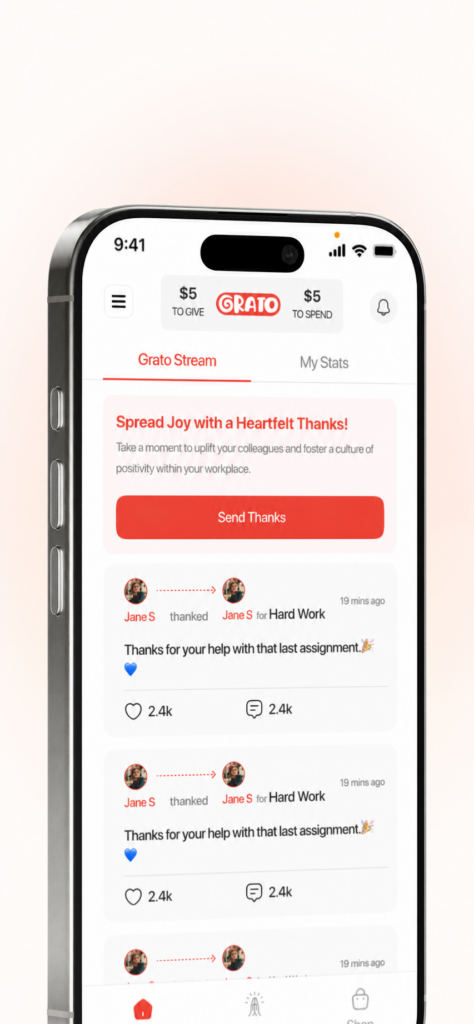
Make appreciation visible across every location
Remote employee recognition should help people feel connected, not monitored. The goal is to notice valuable contributions consistently and make sure distance does not determine who receives appreciation.
Grato gives distributed teams a simple way to say thanks, remember birthdays and work anniversaries, and create team or company awards. Because Grato is free to use, small businesses can make recognition more visible without adding a large new expense.
When appreciation is specific, inclusive, and built into everyday work, employees can feel valued wherever they happen to work.